

Nanni Licitra | Materiale residuo
Lo Magno artecontemporanea, Palazzo Beneventano, Scicli (RG)
28/12/2025 – 28/02/2026


Materiale Residuo
Il fotografo Nanni Licitra lavora nella “Fascia trasformata”, tra Vittoria e Marina di Acate, un territorio attraversato da serre, plastica e vapori. Non cerca la cronaca né l’evidenza: osserva ciò che resta nell’aria, nelle superfici, negli strati più sottili del paesaggio, lasciando che gli elementi emergano senza forzarli, come un affiorare lento di ciò che la materia trattiene mentre si dissolve. La Fascia trasformata è una distesa costiera che, nel giro di pochi decenni, ha mutato completamente fisionomia. Qui, a partire dalla seconda metà del Novecento, le coltivazioni aperte hanno ceduto il passo a una serricoltura sempre più estesa, fino a creare un continuum di coperture plastiche che oggi segna il territorio come un’unica superficie produttiva. Le serre hanno ridisegnato l’economia locale e fatto del mercato ortofrutticolo di Vittoria uno dei centri nevralgici d’Italia. Ma questa espansione ha lasciato segni profondi: un paesaggio alterato e soprattutto una quantità di rifiuti agricoli che spesso non trova vie di smaltimento. Così, nelle ore incerte della sera, capita che piccoli roghi vengano accesi per eliminare ciò che resta: sono le fumarole, fiammelle brevi e clandestine che non illuminano nulla, ma saturano l’aria di una materia leggera e persistente. È quell’alone, più che il fuoco, a insinuarsi nel lavoro di Licitra.
Le immagini serigrafiche stampate su plastica non mostrano l’atto della combustione: ne catturano la conseguenza. Le forme che emergono sono leggere, mutevoli, simili a nubi ingrossate da una sostanza scura. Il supporto plastico rende la materia ancora più ambigua: superficie e soggetto coincidono, e ciò che vediamo è un’apparizione che evapora mentre la osserviamo. Nessun dettaglio del luogo viene mostrato; eppure la Fascia trasformata sembra inscritta nella densità della luce, lungo la spiaggia deserta, nelle zone morbide in cui il naturale e l’artificiale si sfiorano.
Il trittico su lightbox introduce una dimensione più intima. Al centro, la radiografia di un torace di un operaio agricolo appare come un paesaggio interno attraversato dalla luce; ai lati, la sagoma scura e bruciata di una pianta di pomodoro e quella di una melanzana richiamano le colture dominanti del territorio, esauste e fragili come un corpo che respira a fatica. La relazione fra queste tre immagini non racconta e non spiega, ma allude: il respiro umano e quello della terra sembrano appartenere allo stesso ritmo, allo stesso stato di affaticamento.
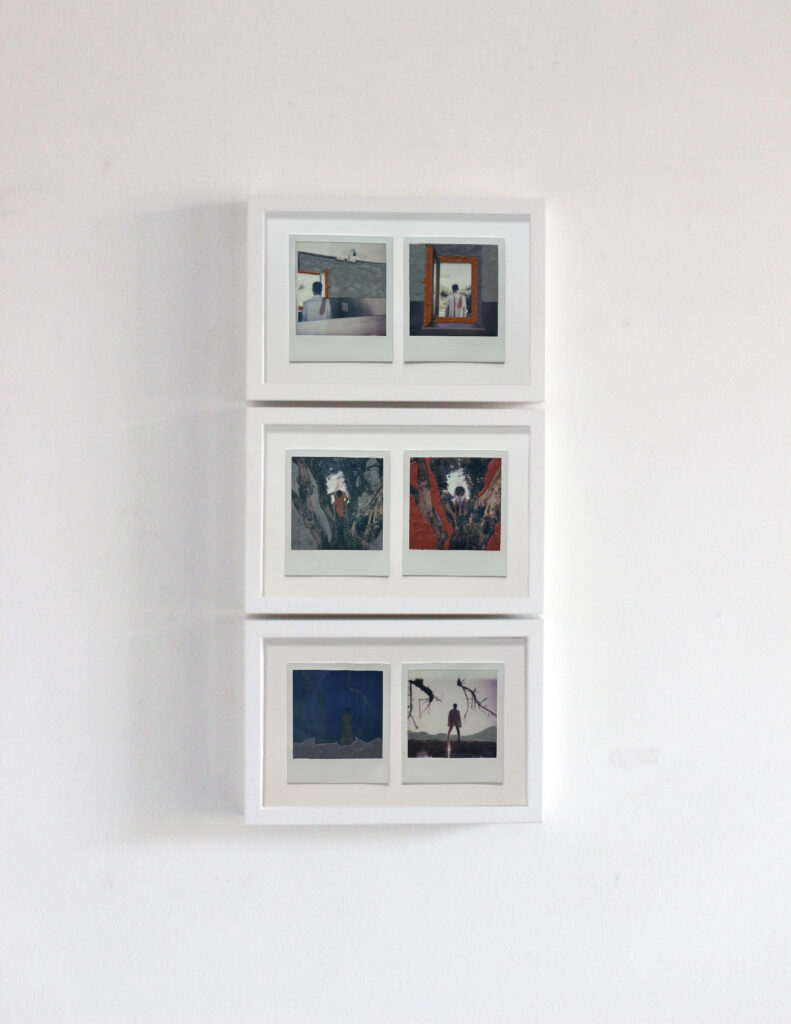
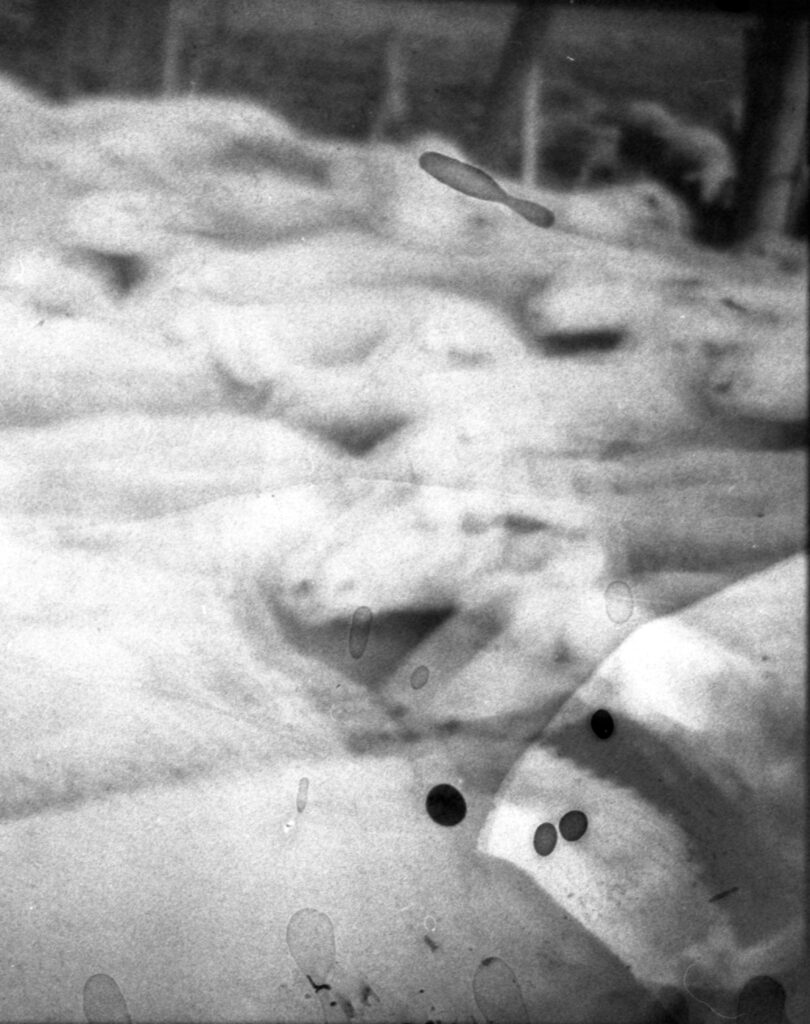
Nel trittico analogico, l’indagine di Licitra si avvicina ancora di più alla materia. Da un lato la condensa sul vetro di una serra sembra un respiro trattenuto, un volto che si appanna e si ritrae; dall’altro, il grande foro su una plastica bruciata ricorda le combustioni esistenzialiste di Alberto Burri, maestro del Dopoguerra, in cui la ferita della materia diventa immagine. Qui la combustione non è dramma ma sembra aprire un varco: una soglia che rivela la vulnerabilità del paesaggio.
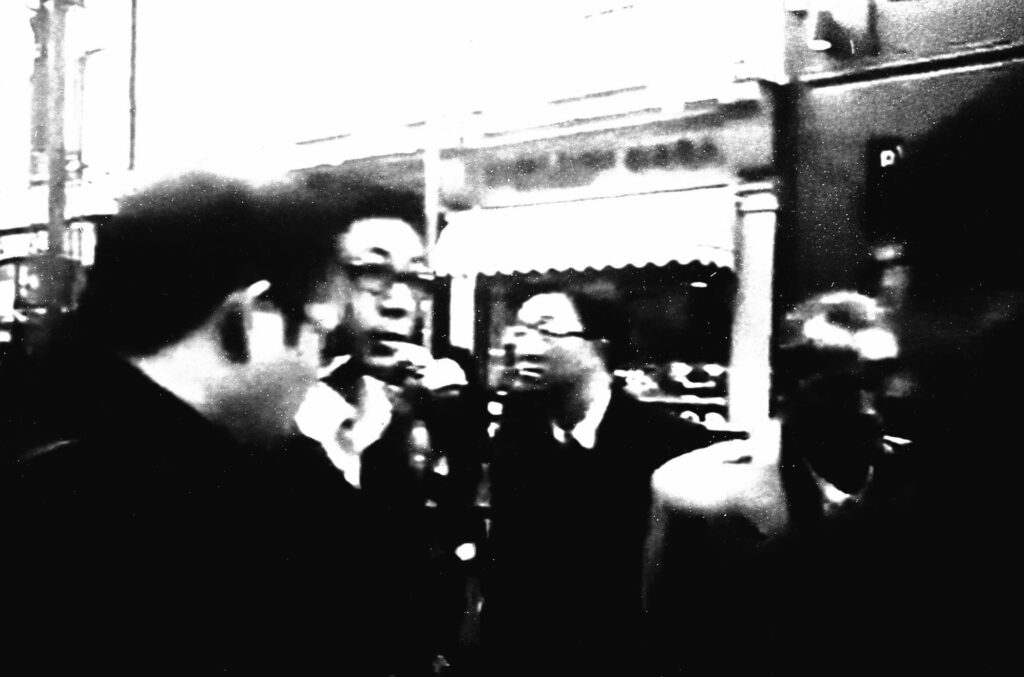
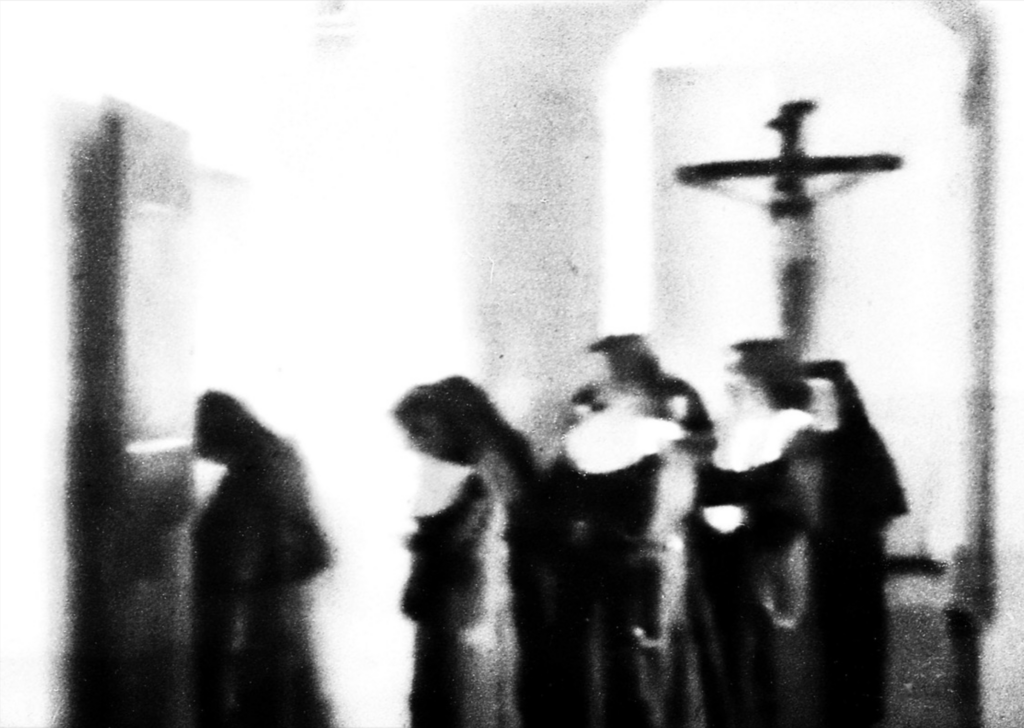
Questo progetto nasce da un’urgenza nuova all’interno di un percorso che, finora, Nanni Licitra ha condotto su registri più astratti, legati al tempo, alla memoria, alla musica. Le sue influenze – l’immaginario in bianco e nero di Daido Moriyama e una sensibilità vicina a quella di Anton Corbijn, tra gli altri – restano come ritmo sotterraneo, sfocato, senza mai imporsi. La sua pratica, spesso rivolta alle periferie urbane attraversate nei suoi viaggi, trova qui una declinazione inattesa: Materiale residuo porta quello stesso sguardo mobile e inquieto nella campagna del luogo d’origine del fotografo, dove la materia continua a trasformarsi e a depositarsi nell’aria come una memoria in atto.
La forza del lavoro sta nella sospensione: nella plastica, nel fumo, nella pianta, nel torace, nel vetro che respira, nel materiale lacerato dal fuoco. Tutto appare e si ritrae, come se il mondo si manifestasse solo per un attimo prima di tornare a essere vapore. Il residuo è ciò che persiste. È la forma lieve e ostinata della memoria che resta nell’aria, anche quando nessuno la guarda più.
Valentina Bruschi, Dicembre 2025
Materiale Residuo
The photographer Nanni Licitra works between Vittoria and Marina di Acate, a portion of South-east Sicily, known as “Fascia trasformata”, where greenhouses, plastic, and vapour pollute the landscape. The artist is not interested in reportage or direct evidence; instead, he observes what lingers in the air, on surfaces, in the thinnest layers of the landscape. He lets elements surface on their own, like a slow rising of what matter holds as it dissolves. From the second half of the twentieth century, in just a few decades, the coastal strip-the so-called Fascia trasformata-has completely changed its appearance: the open fields gave way to increasingly expansive greenhouse farming, gradually forming a continuum of plastic coverings that now mark the land as a single productive surface. The greenhouses reshaped the local economy and turned the fruit and vegetable market of Vittoria into one of Italy’s major hubs. Yet this expansion has left deep traces: an altered landscape and, above all, an accumulation of agricultural waste that often has no found way of disposal.
At dusk, when the daylight can’t show anything with certainty, small fires are sometimes lit to burn what remains. These fumaroles – brief, clandestine flames – illuminate nothing but saturate the air with a light, persistent substance. It is this haze, more than the fire itself, that spreads in Licitra’s work.
The silk-screen prints on plastic do not represent the act of burning; they capture what follows. The forms that emerge are light, mutable, cloud-like volumes filled with dark matter. The plastic support makes this substance even more ambiguous: surface and subject overlap, and what we see is an apparition that evaporates as we look. No detail of place is shown, yet the Fascia trasformata seems inscribed in the density of the light, along the empty shoreline, in the soft areas where the natural and the artificial brush against one another.
The lightbox triptych introduces a soulful dimension. In the middle, the X-ray of an agricultural worker’s chest appears like an inner landscape crossed by light; on either side, the silhouettes of a tomato plant and an aubergine live their dark, charred state, recalling the region’s dominant crops – exhausted and fragile like a body struggling for breath. The relationship between these three images neither narrates nor explains; it suggests. The breathing of the human body and that of the ground seem to fall into the same rhythm, the same state of fatigue.
In the analog diptych, Licitra’s research moves even closer to the matter. On one side, condensation on the surface of a greenhouse feels like a held breath, like a face fogging up and withdrawing; on the other, the large hole in a sheet of burned plastic evokes the existential combustions of the post-war master Alberto Burri, for whom the wound in the material becomes image. Here the burn is not dramatic, but seems to open a passage – a threshold that reveals the vulnerability of the landscape.
Until now, Licitra has worked in more abstract registers linked to time, memory, and music. His influences – the black-and-white imaginary of Daido Moriyama and a sensitivity close to that of Anton Corbijn, among others – remain as an underlying rhythm, blurred, never imposed. His work-often looking to the urban peripheries experienced during his travels-finds in this recent project an unexpected form: Materiale residuo brings that same restless, roaming gaze into the countryside of the photographer’s own origin, where matter continues to shift and settle in the air like memory in the process of becoming.
The strength of the work lies in its suspension: in the smoke, the plant, the chest, the breathing plastic, the material lacerated by fire. Everything appears and withdraws, as if the world revealed itself only for a moment before returning to vapour. The residue is what persists. It is the light, stubborn shape of memory that remains in the air, even when no one is looking anymore.
Valentina Bruschi, December 2025