Within the Resounding Silence of the Surface
Reflections on the Painting of Emanuele Giuffrida
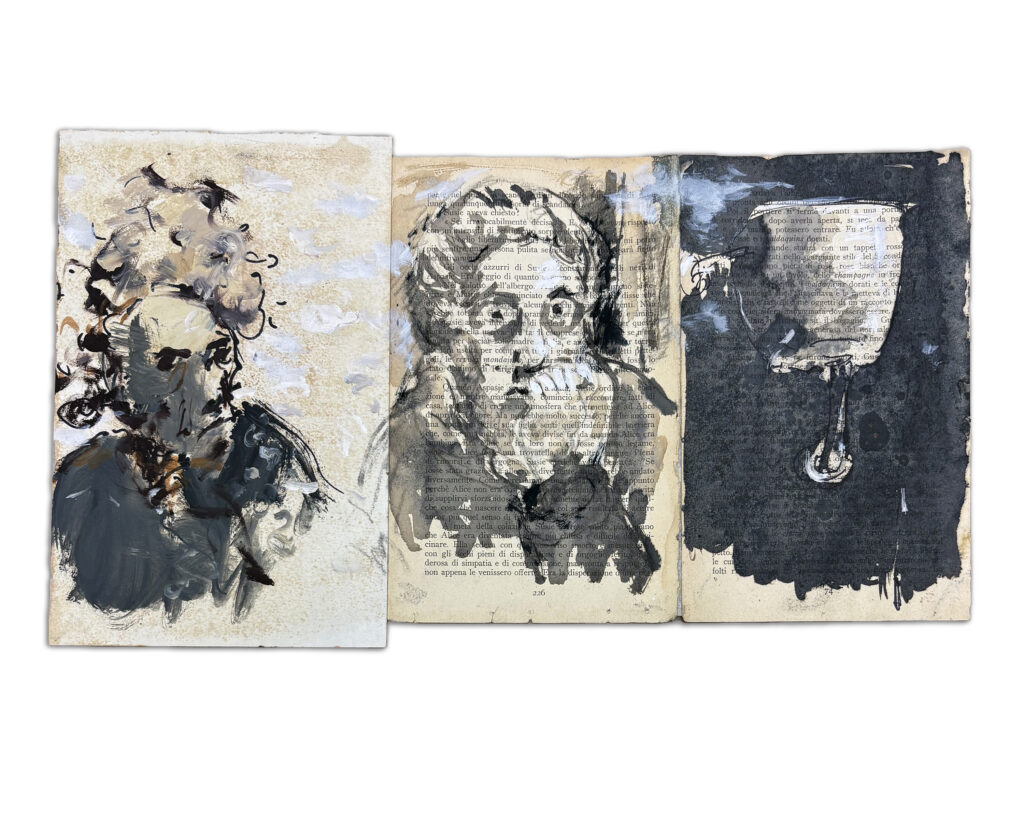
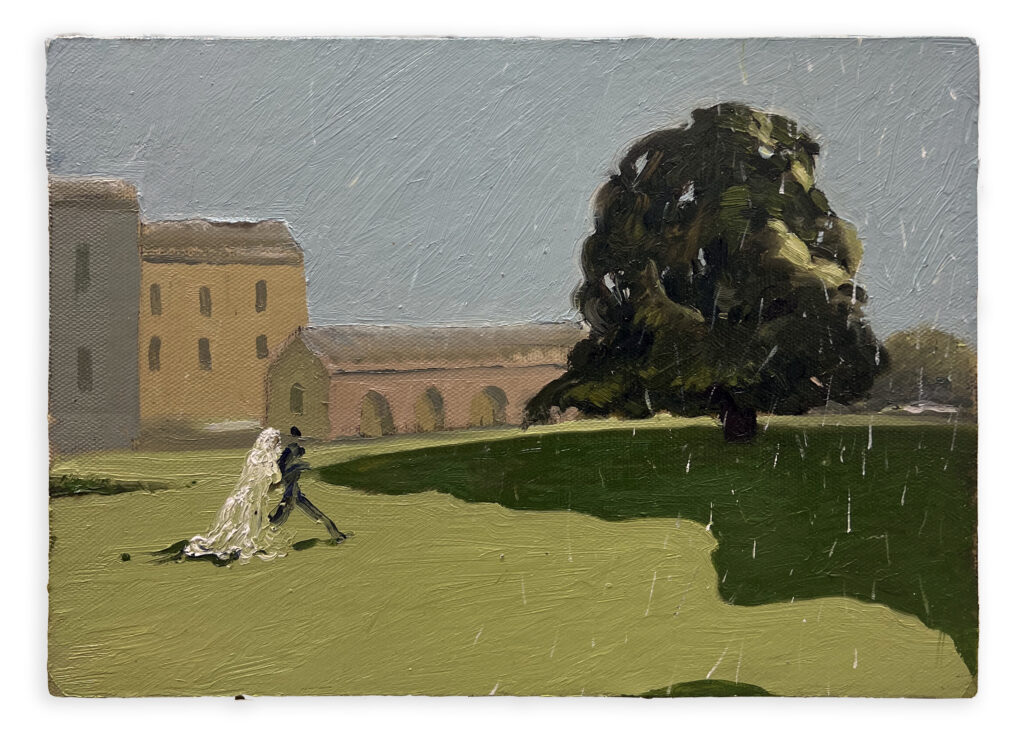
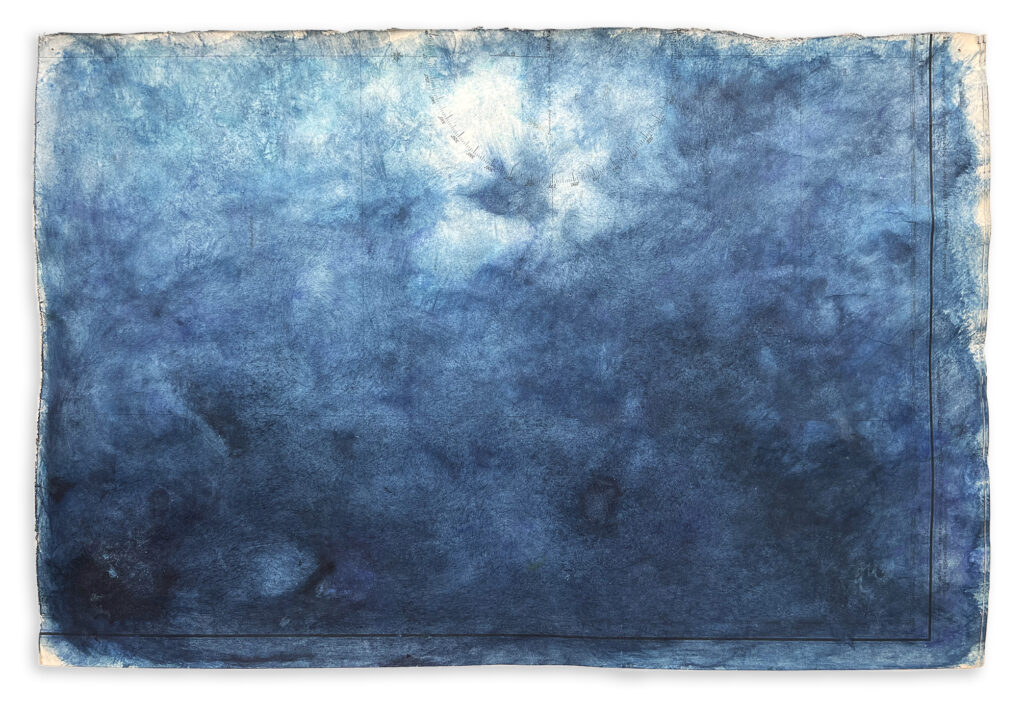
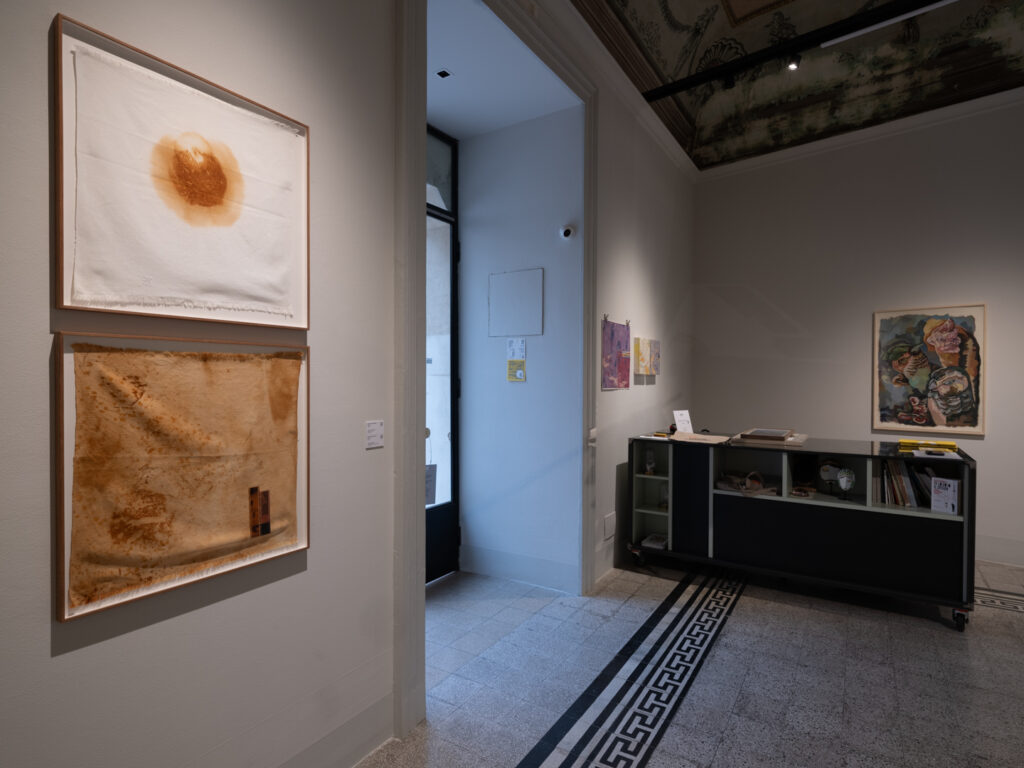
In the painting of Sicilian artist Emanuele Giuffrida (Gela, 1982 – lives and works in Palermo), there is a moment when the most intimate layer of personal memory overlaps with the complex morphology of reality: it is within that eclipse – fragile and dawning – that the artwork is born. In this fleeting instant, the surface of the world – often the hardest and most seemingly impenetrable – whether made of rough asphalt or a pristine white sheet, becomes a perceptual threshold: at once visual, psychological, and existential. It is here that the artist’s gaze settles, in search of images and figures woven from tension and recurrence. These are not mere reconstructions of traces from news events, but authentic visions – generated by an inner process that is deep and radical – where pareidolia becomes a revelatory tool, a poetic cornerstone of his research.
Pareidolia – the cognitive phenomenon that leads us to recognize faces, figures, or familiar forms in ambiguous or random patterns – is not, for Giuffrida, a simple visual curiosity, but an alternative and stimulating key to decoding reality. This is not a perceptual game, but a profound way of interpreting the world, in which the gaze becomes an instrument capable of attributing meaning to everything around us. Through this lens, Giuffrida’s approach to perception aligns with the thought of phenomenologist Maurice Merleau-Ponty, who believed that seeing does not merely mean registering what is there, but actively participating in the construction of the world – a process involving body and consciousness in equal measure. Thus, what emerges from the canvas is not simply what has been observed, but what has been intuited, recognized inwardly, and then allowed to surface until it becomes a clear image.
Painting, then, becomes a kind of inner map, where the formless and the nebulous take shape as visions – symbolic constellations that do not directly reference events, but rather what those events have inscribed in the collective consciousness. The recurring figures that emerge – the sheet, the asphalt, bullet holes, shell casings, shattered glass – are not icons of the news, but traces of a fluid memory: vague, floating signs, almost archetypes. In this sense, memory is not a mere replica of the past, but a poetic re-evocation: a living body that shifts under the pressure of time’s relentless flow and the gaze, constantly shaped by the artist’s evolving vision of the world.
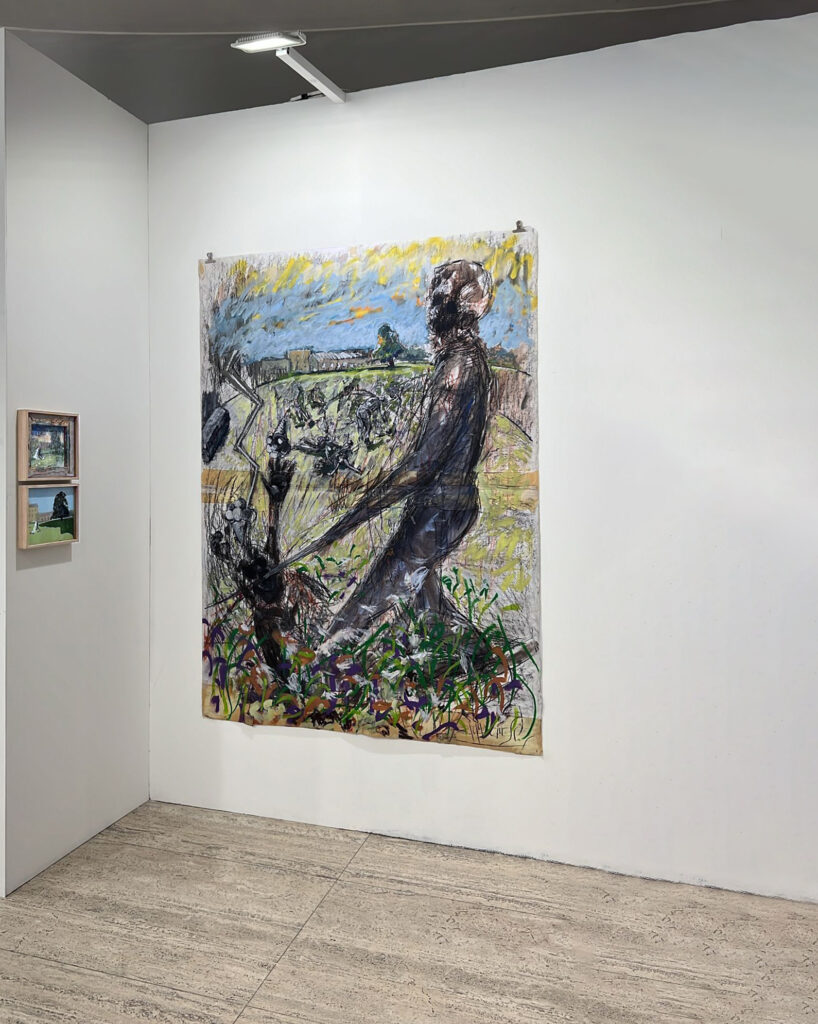
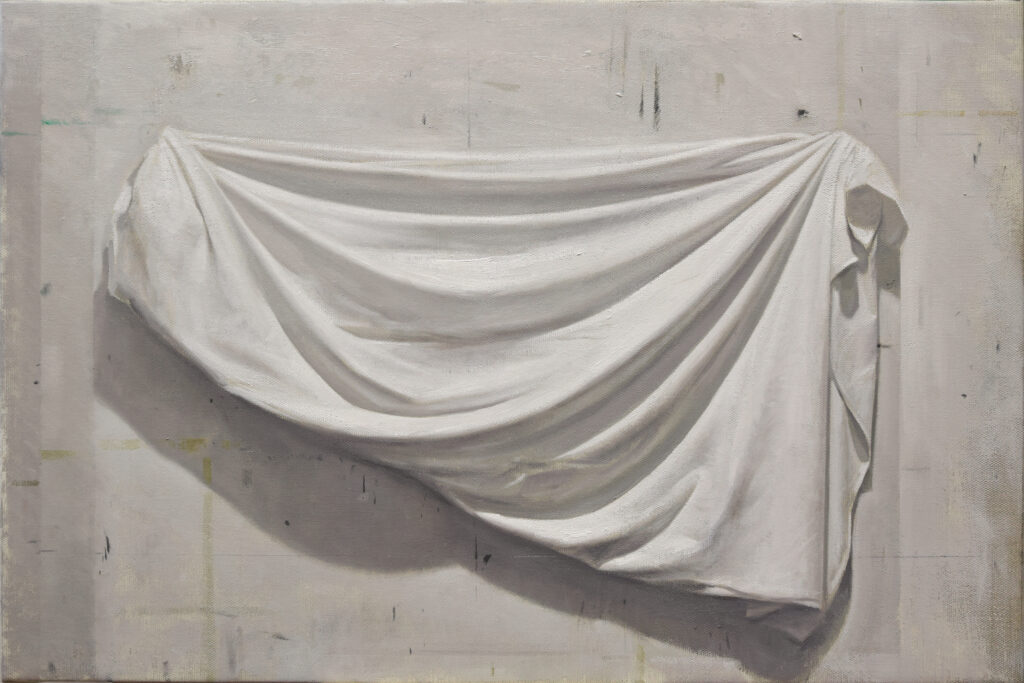
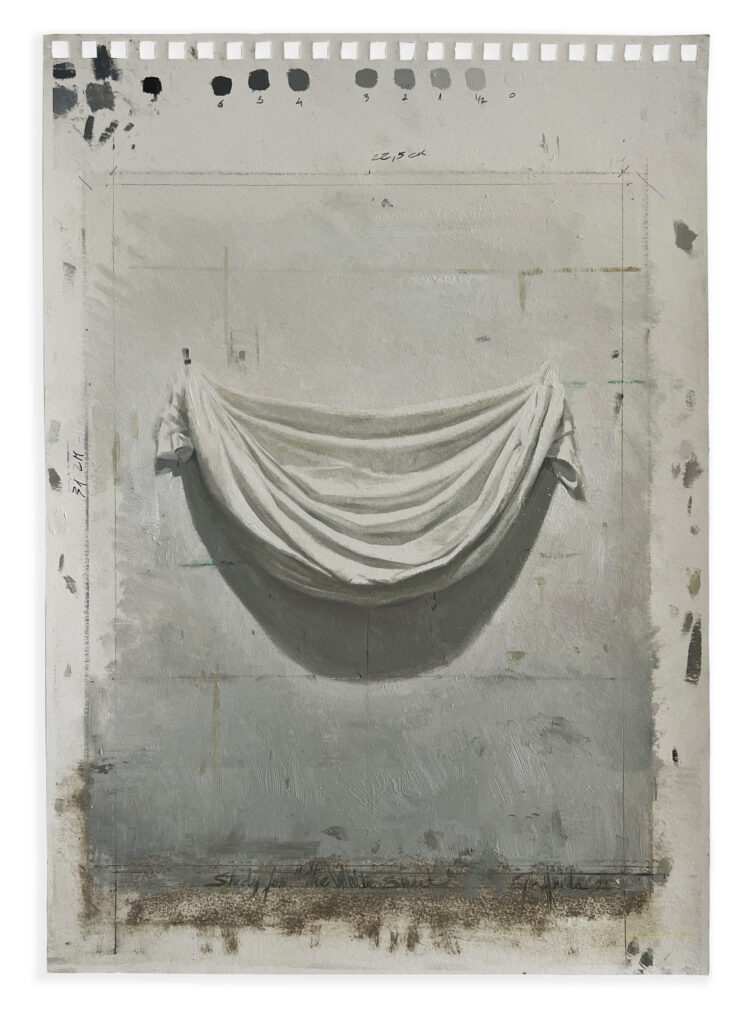
Raised in Gela during the 1990s – a context marked by darkness, illicit dealings, and imposed silences – Giuffrida absorbed, from an early age, images that would resurface in his painting years later. As he recounts, that setting left a lasting impression: “I remember as a child […] a man wrapped in a floating sheet.” That vision, suspended between trauma and the imagination of childhood, never dissipated. It sank deep, gradually transforming into a visual grammar that today takes shape on canvas.
What grants Giuffrida’s work its radical contemporaneity, however, is his refusal of the full, narrative, illustrative, and overtly descriptive image. He does not seek to portray violence, but to question it, withhold it, suspend it. His works do not aim to reconstruct specific events, but rather to evoke a perceptual and symbolic threshold – a space where the invisible can emerge. In this act of subtraction – marked by formal rigor and a deliberate emotional restraint – Giuffrida contributes to a broader discourse on the image as enigma, recalling, in the words of Georges Didi-Huberman, that, despite everything, “the image often holds more memory and more future than the one who looks at it.”
In particular, the recurring image of the sheet shrouding a body does not narrate a death, but opens an imaginative space suspended between presence and absence, between the human and the chimeric. It is within this ambivalence that the symbolic power of his painting resides: not in faithfully depicting, but in gently suggesting; not in fully revealing, but in constructing a distance which, though palpably close, creates a silence that invites one to linger.
Thus, in an era saturated with images and driven by a voracious and rapid consumption of the visual, Giuffrida performs a gesture of resistance: he slows the gaze, restoring to the image its suspension, its opacity, and its mystery.
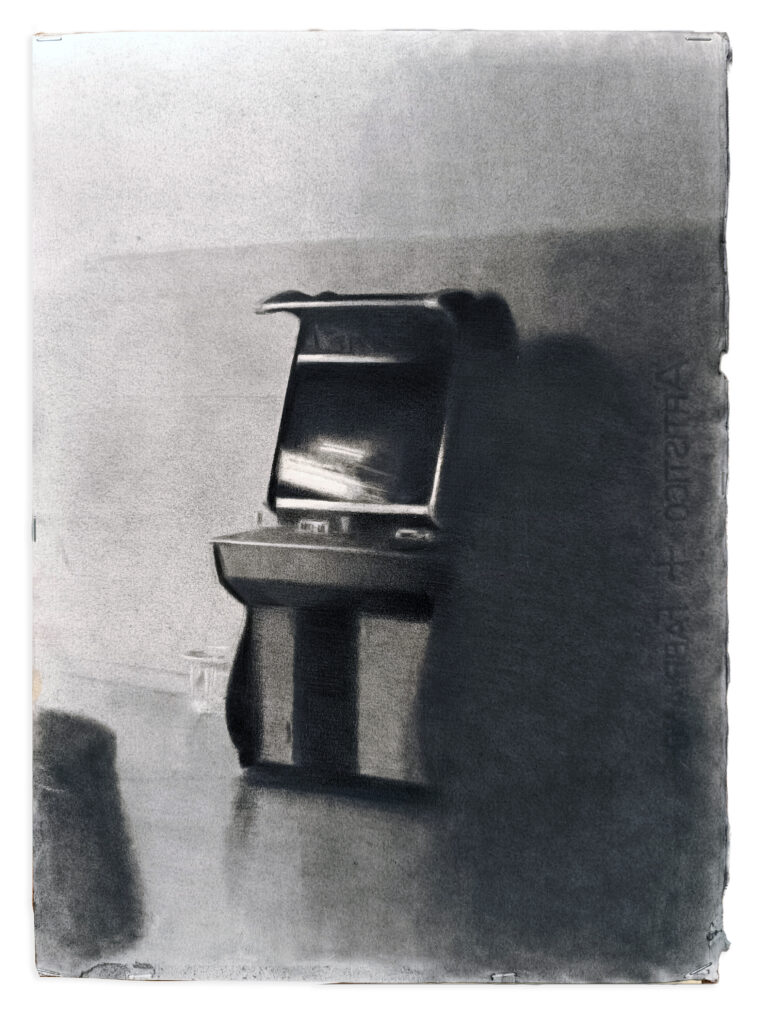
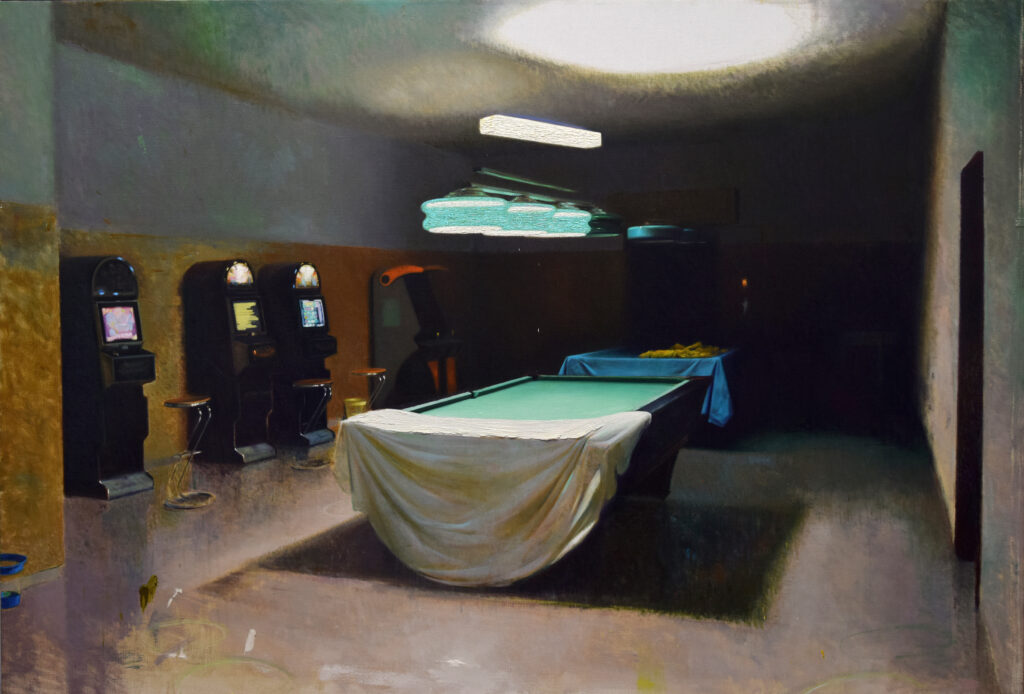
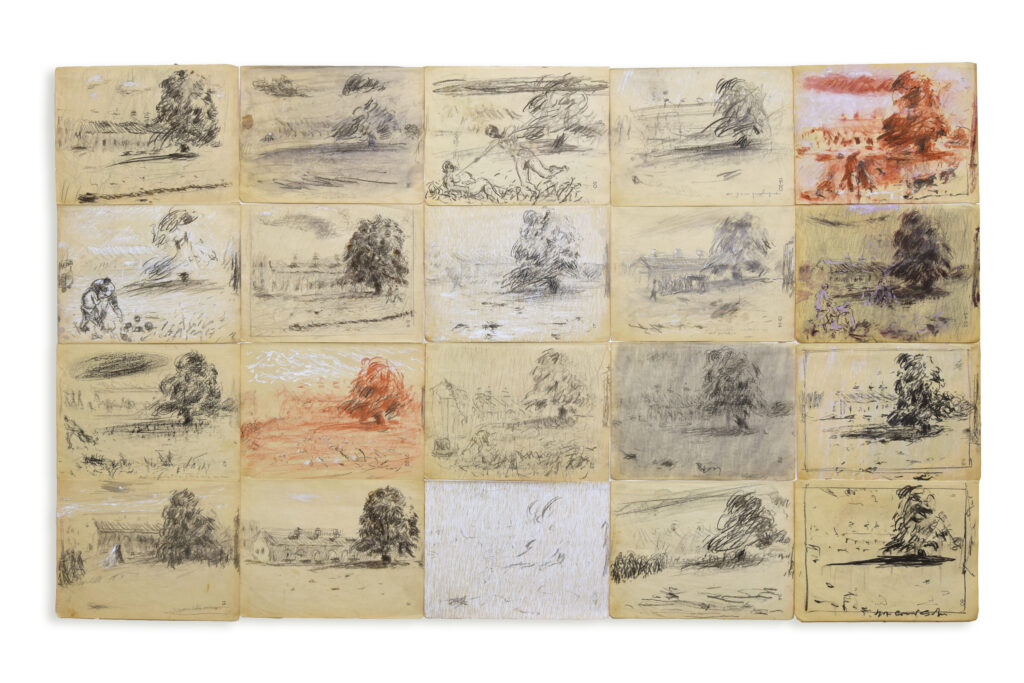
This reflection extends even to the landscape, composed of blazing fires, gaming halls, streets and crime scenes, as well as objects from everyday life – cars, tables, pool hall lights, slot machines – unlikely yet familiar presences that, in Giuffrida’s painting, are transfigured into lifeless yet meaning-laden symbols. His works – rooted in a sharp, at times almost cinematic realism – go beyond showing what the eye sees: they transform the space of lived time into an existential realm, one in which, as Henri Bergson wrote, past, present, and future intertwine in a continuous becoming.
Seemingly ordinary places are charged with metaphysical tension: they become restless, questioning, at times unsettling, as though the very existence of things concealed a deeper truth – one perhaps even more disquieting. The viewer is thus called not only to look, but to pause and reflect, to confront face-to-face the enigmas of everyday existence.
In this stripped-down, lucid, and unadorned reality, the élan vital of the work manifests: a silent, luminous force that translates into the dignity of living – into the quiet courage of existing, despite it all. This is a painting that, in its restraint, releases a meditative and spiritual aura, where matter becomes a vessel for thought, and where absence – when present – speaks with the same intensity as form. A work may arise from social reflection or from intimate, personal memory and intuition, but what truly matters is that it retains a strong and precise aesthetic value – a structure capable of sublimating the real and transforming it into a shared and deeply felt experience.
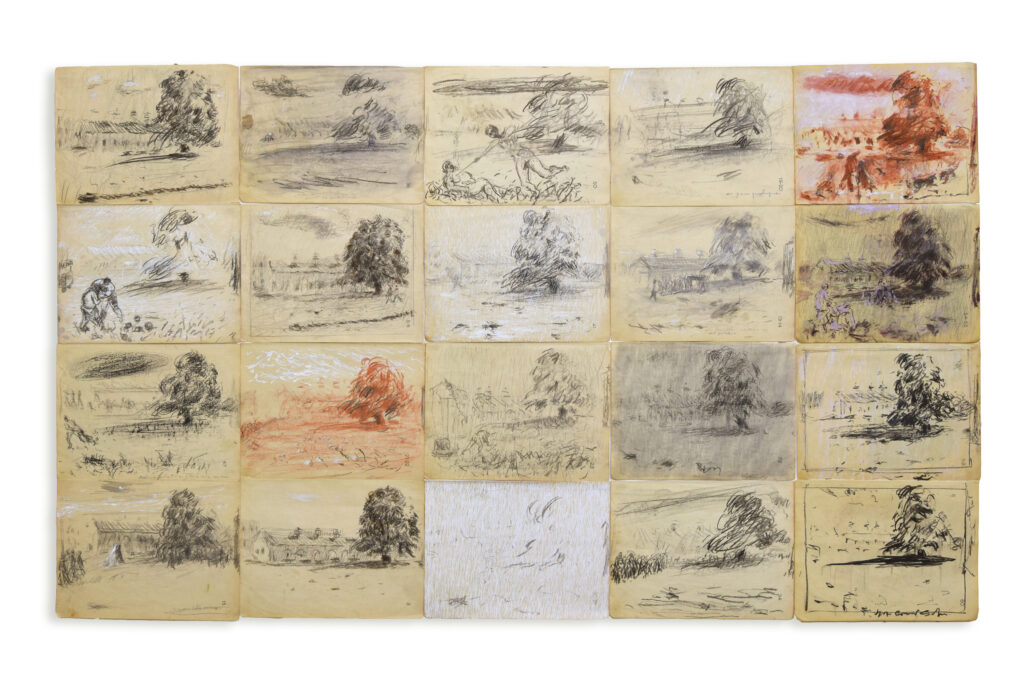
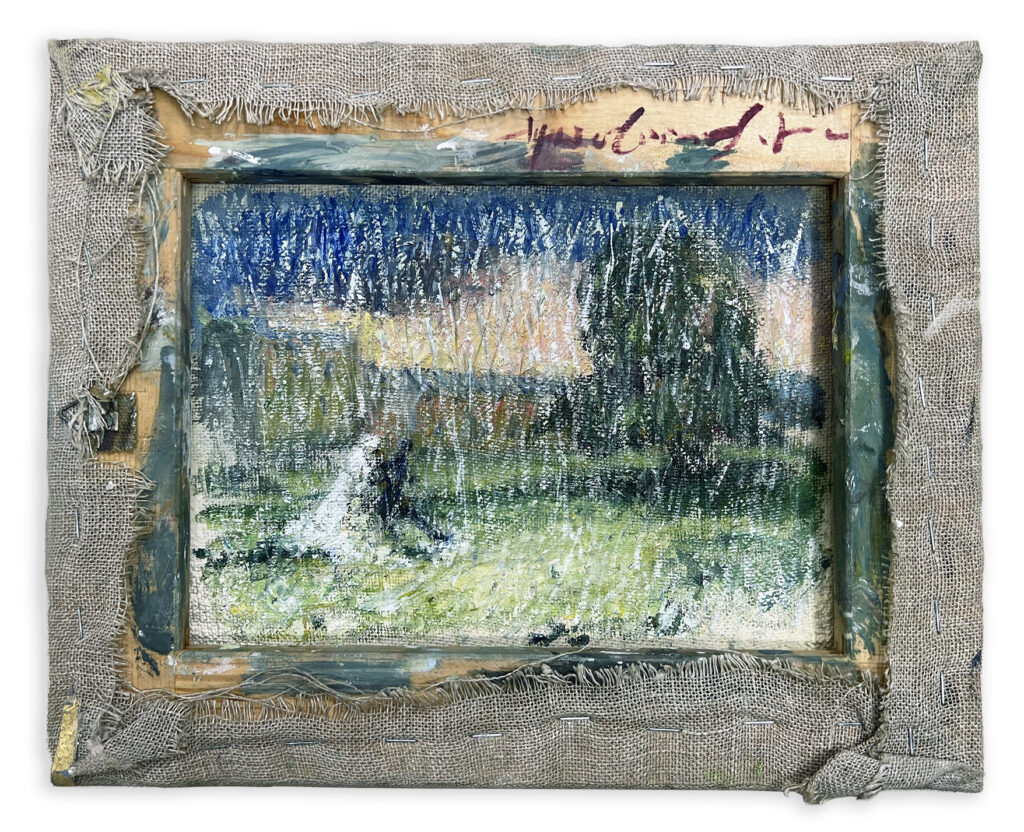
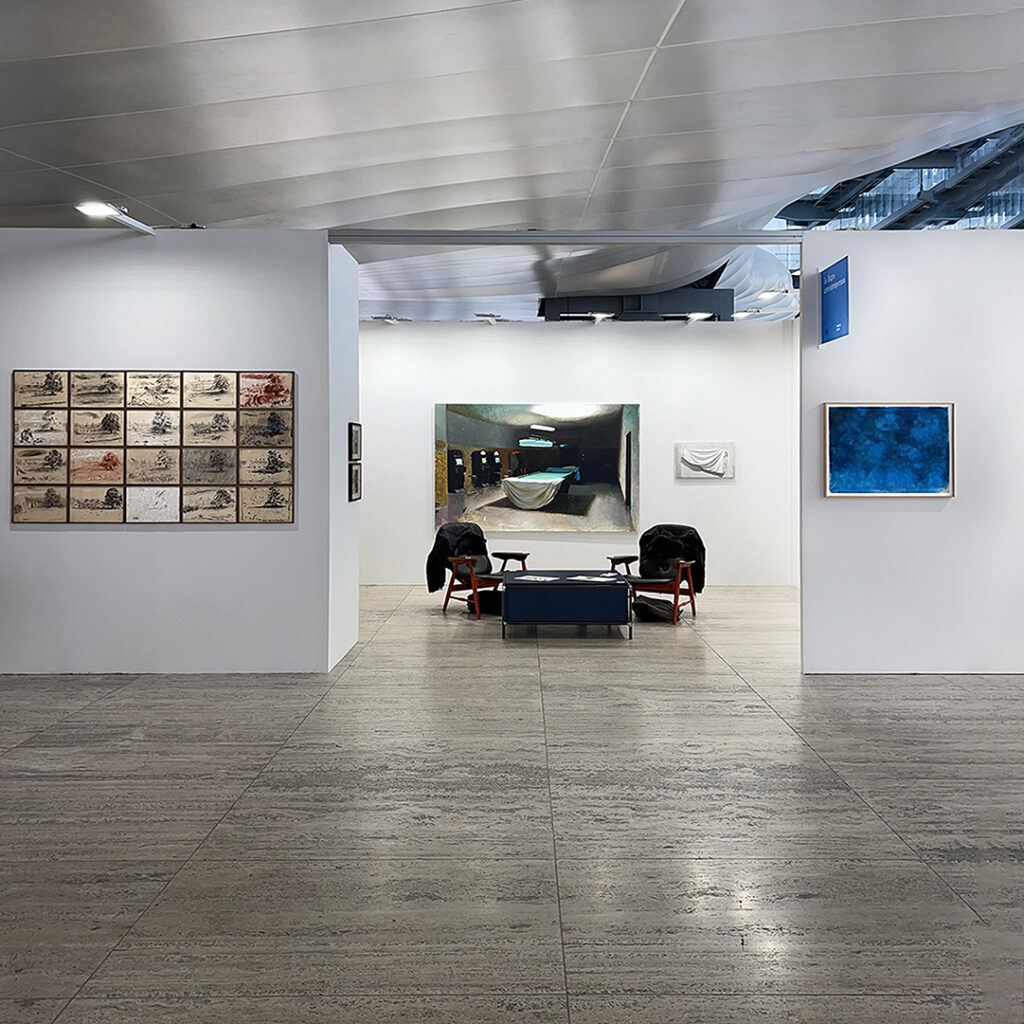
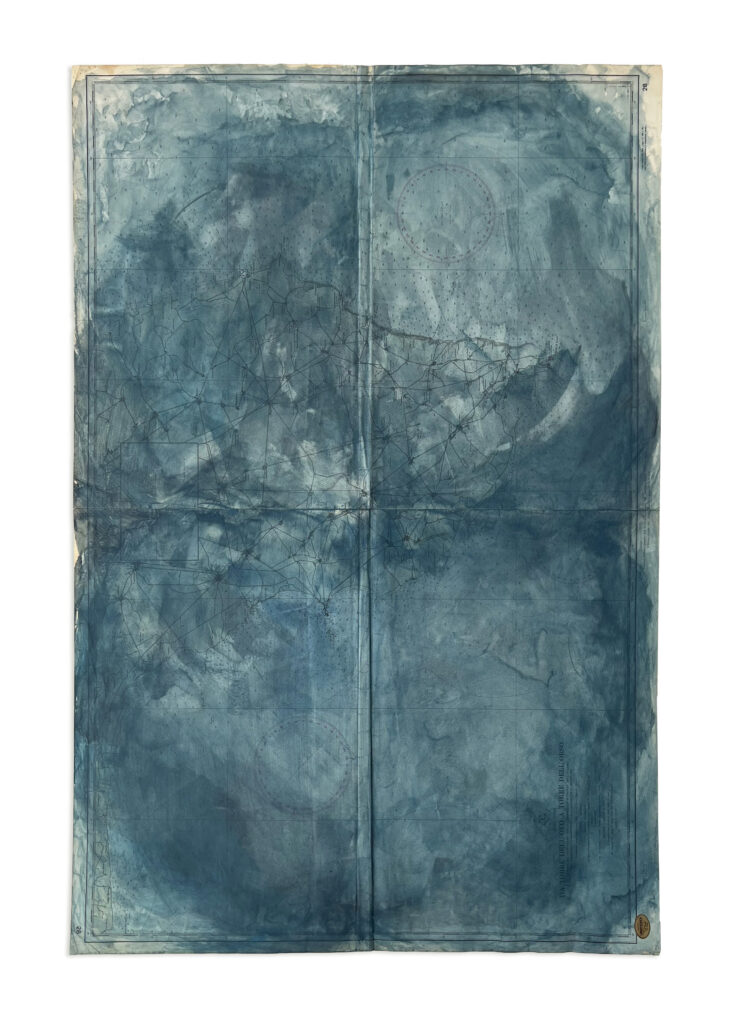
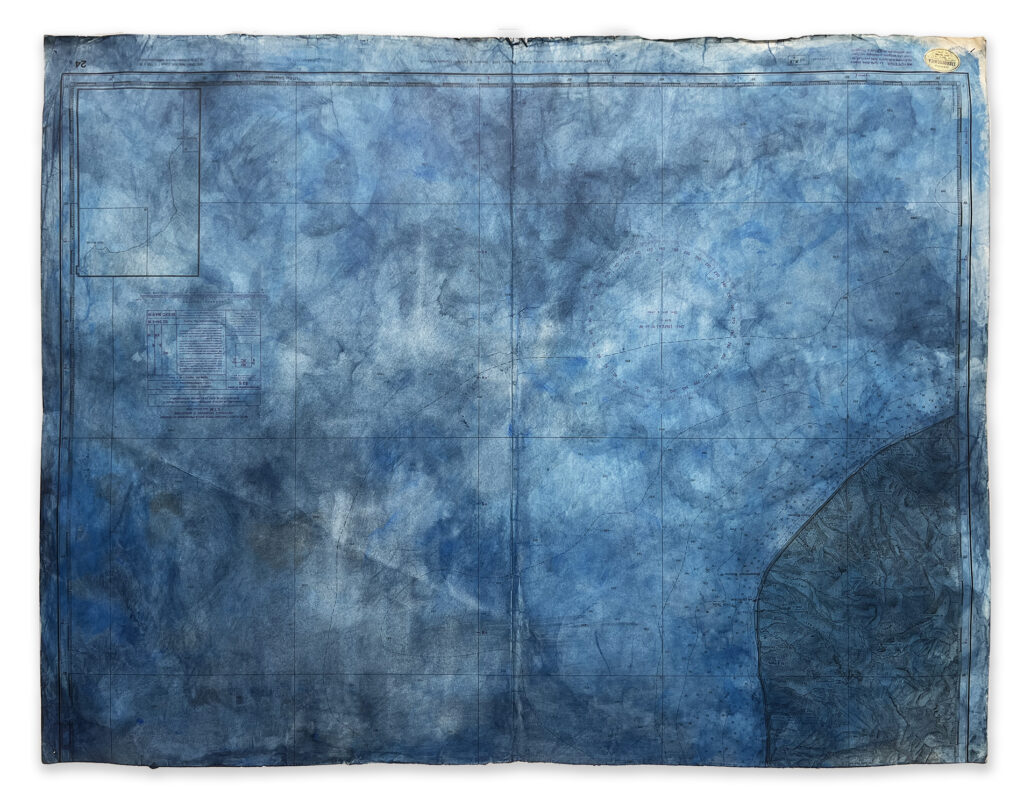
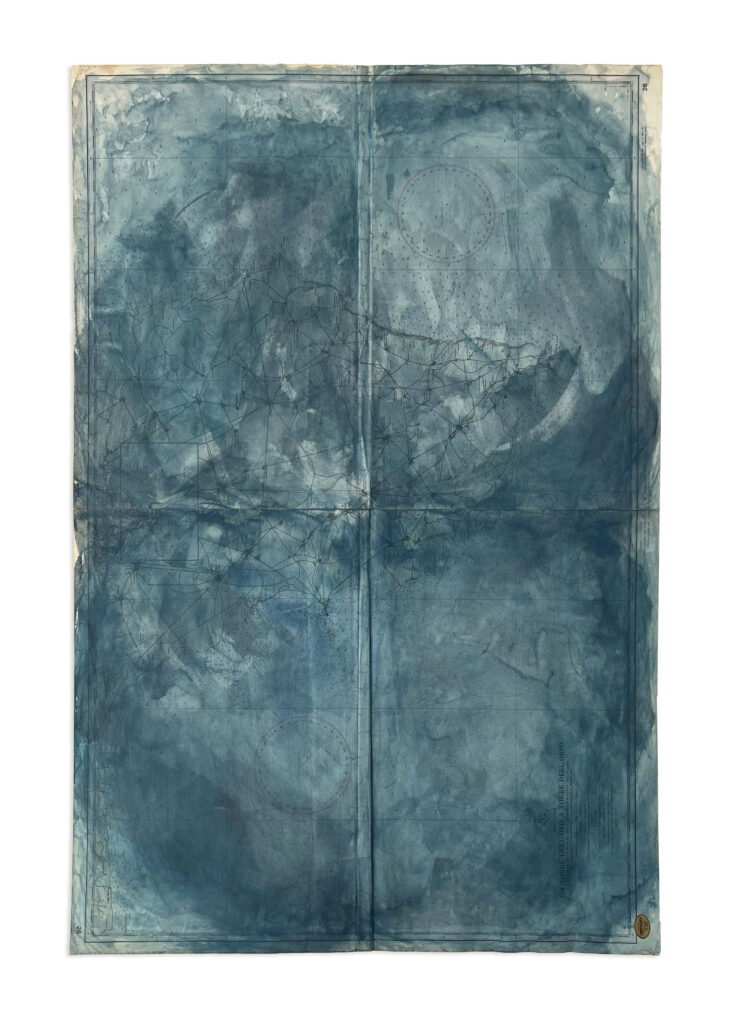
For Giuffrida, the pictorial gesture takes on an almost ritual significance. He favors oil painting for its ability to render nuance, depth, and slowness. Even in his drawing – often made with layers of graphite enriched with gouache or other water-based media – the material is never merely a mark, but painting in its own right. His compositions emerge from broad applications, where light, scene, and atmosphere take precedence over detail. The latter, when present, is subordinate to the overall breath of the image and its capacity to evoke smells, silences, suspensions, moments of waiting – or even a profound spleen.
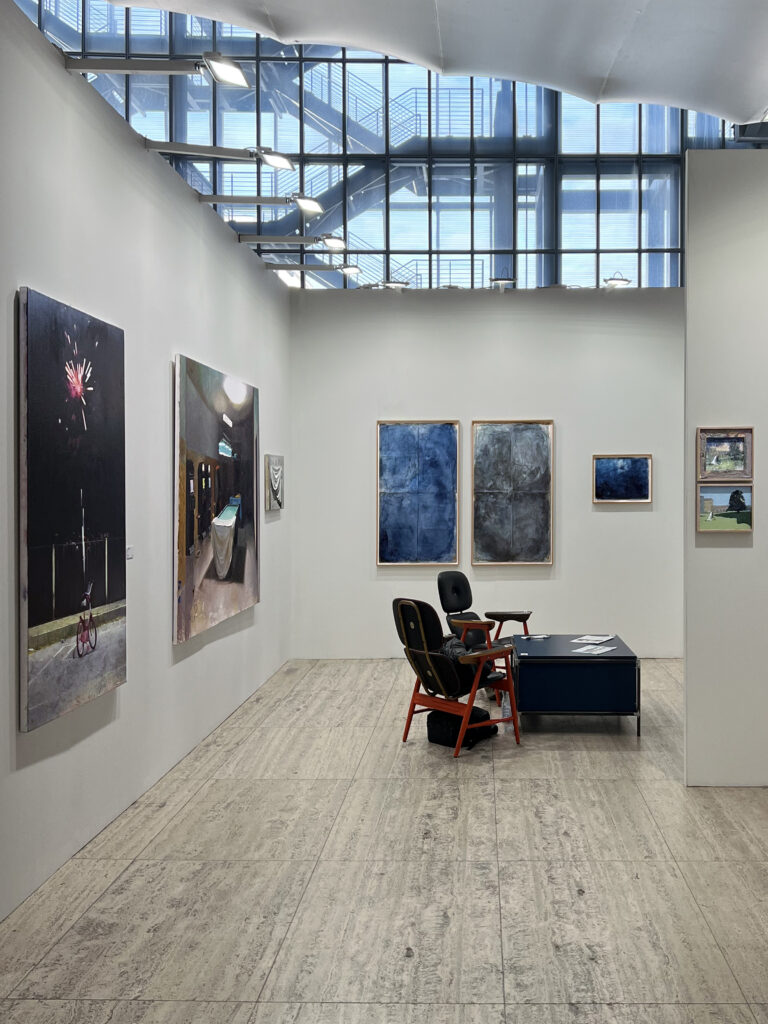
The works, at times large in scale, function as fully immersive devices: painterly spaces capable of drawing in the gaze and transporting the viewer in medias res. Through vanishing points, tilted planes, and suspended voids, every element contributes to building a perceptual experience in which painting is not merely an image to be observed, nor a simple pretext, but a space to be crossed, to be experienced, to be fully lived. It is within this space – at once real and symbolic – that the human being may recognize a reflection of themselves: fragile or elusive, yet always held within the silence of the surface.
It is precisely on this subtle threshold – between the visible and the invisible, between contingency and disorientation – that the enigmatic painting of Emanuele Giuffrida reveals its deepest power: to make us intuit without ever fully revealing, calling us into an enduring relationship with the artwork – one rooted in a visceral kind of perception, within a space distinctly shaped by pareidolia, where doubt takes form and questioning becomes embodied.
Milan, September 15, 2025
Domenico de Chirico